
NSW Maths Syllabus Changes 2026: What Year 10, Year 11 and Year 12 Students Need to Know
May 22 2026
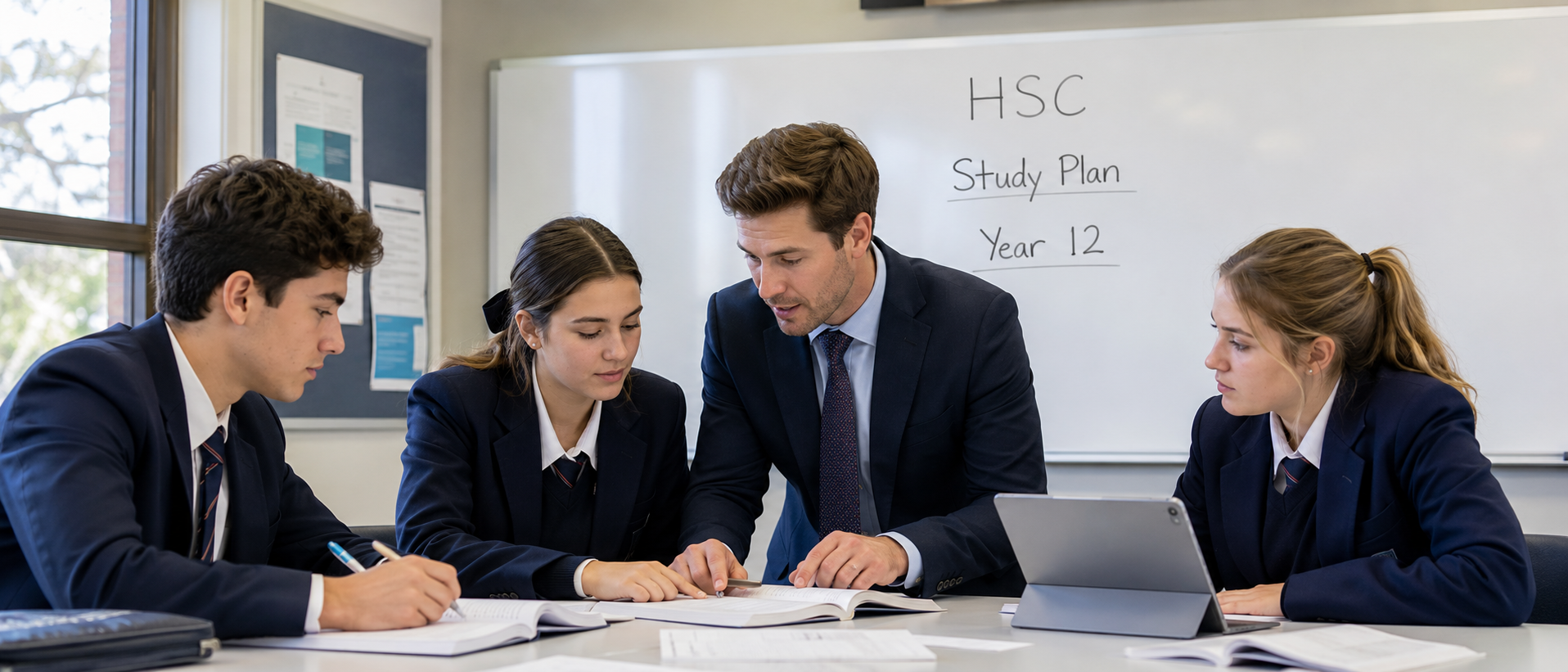
The NSW Mathematics syllabus is changing, and many parents are wondering what this means for their child’s subject choices, school marks and HSC preparation.
From 2026, students entering Year 11 will begin studying the new Mathematics 11–12 syllabus. This means the first HSC examination based on the new syllabus will be in 2027. According to NESA, the updated Mathematics 11–12 syllabus has been designed to build on the new Years 7–10 Mathematics curriculum and provide clearer essential learning for senior students.
For students currently in Year 10, this change is especially important because their Year 10 preparation will directly affect whether they are ready for Mathematics Standard, Mathematics Advanced or Mathematics Extension in Year 11.
Why is the Maths syllabus changing?
The new syllabus is part of the broader NSW Curriculum Reform. The aim is not to make Mathematics completely different, but to make the learning structure clearer and better connected from junior years to senior years.
NESA explains that the new Mathematics 11–12 syllabuses include a revised structure for outcomes and content, with streamlined content that builds on the new Stage 4 and Stage 5 curriculum. There is also a stronger focus on Working Mathematically, which includes:
- Communicating
- Reasoning
- Understanding
- Fluency
- Problem solving
In simple terms, students are expected to do more than memorise formulas. They need to understand concepts, explain their thinking and apply maths to unfamiliar problems.
What is changing for Year 10 students?
Year 10 students are in an important transition year. Under the new Stage 5 Mathematics syllabus, the old 5.1 / 5.2 / 5.3 structure has been replaced by a Core–Path structure.
| Year 10 | [Core] | ➡ ️ [Mathematics Standard] |
| [Path] | ➡ [Year 11 Mathematics Advanced or Mathematics Extension] |
This means parents should not simply ask, “Is my child doing Year 10 Maths?”
A better question is:
“Is my child covering the Path topics needed for Advanced or Extension Mathematics?”
Some students may be doing well in school but may still have gaps if their class has not covered enough Path content. These gaps can become much more obvious when they begin Year 11 Advanced Mathematics.
What is changing in Year 11 and Year 12 Mathematics?
The overall subject options remain familiar:
- Mathematics Standard
- Mathematics Advanced
- Mathematics Extension 1
- Mathematics Extension 2
However, the syllabus has been updated to align more clearly with the new Years 7–10 curriculum.
Art of Smart’s overview notes that many of the changes are relatively minor in terms of topic areas, but students still need to be careful because some details, dot points and expectations have changed.
This means older resources and past papers may still be useful, but they should be used selectively. Not every old question will perfectly match the new syllabus.
Mathematics Standard: What students should know
Mathematics Standard continues to focus on practical and applied mathematics. Key areas include:
- Algebra
- Financial Mathematics
- Measurement
- Networks
- Statistics
These areas are similar to the previous syllabus structure, but students should expect a stronger focus on applying skills to real-world and multi-step problems. Art of Smart also identifies these five areas as continuing across Year 11 and Year 12 Mathematics Standard.
Mathematics Standard may be suitable for students who want a practical mathematics course and do not need Mathematics Advanced for their future university pathway.
Mathematics Advanced: Why Year 10 preparation matters
Mathematics Advanced requires a stronger foundation in algebra, functions, graphs, trigonometry and problem solving. The main areas include:
- Functions
- Trigonometric Functions
- Sequences and Series
- Calculus
- Exponential and Logarithmic Functions
- Statistical Analysis
- Financial Mathematics
Art of Smart notes that these areas remain largely similar to the previous curriculum, but the new syllabus places clearer emphasis on how students are expected to apply their knowledge.
For Year 10 students, this means strong results in basic school tests may not be enough. Students who want to choose Advanced Mathematics should be confident with:
- algebraic manipulation
- equations and inequalities
- linear and non-linear graphs
- trigonometry
- functions
- problem-solving questions
- multi-step working out
If a student has not developed these skills by the end of Year 10, Year 11 Advanced Mathematics can feel very fast and difficult.

Mathematics Extension: Strong foundations are essential
Mathematics Extension 1 is designed for students who are confident in Mathematics Advanced and want a more challenging course. The key areas include:
- Functions
- Proof
- Vectors
- Trigonometric Functions
- Combinatorics
- Calculus
- Statistical Analysis
Art of Smart’s syllabus summary also highlights these areas as part of the updated Extension 1 course.
Students considering Extension Mathematics should not only be “good at maths”. They should be comfortable with challenging questions, abstract thinking and explaining their reasoning clearly.
Can students still use old past papers?
Yes, but carefully.
Many older past paper questions are still useful because the core mathematical skills have not disappeared. However, students need to know which questions still match the new syllabus and which ones are less relevant.
This is important because syllabus changes may affect:
- which topics are assessed
- how topics are grouped
- the style of questions
- how much explanation is required
- whether multiple concepts are combined in one question
As Art of Smart explains, old resources can still be helpful, but students need to be selective because some added or removed content may not be reflected in older materials.
At Pre-Uni New College, our focus is not just on giving students more questions. We help students practise the right questions, understand the syllabus expectations and build the skills needed for school assessments and HSC preparation.
The biggest change: Working Mathematically
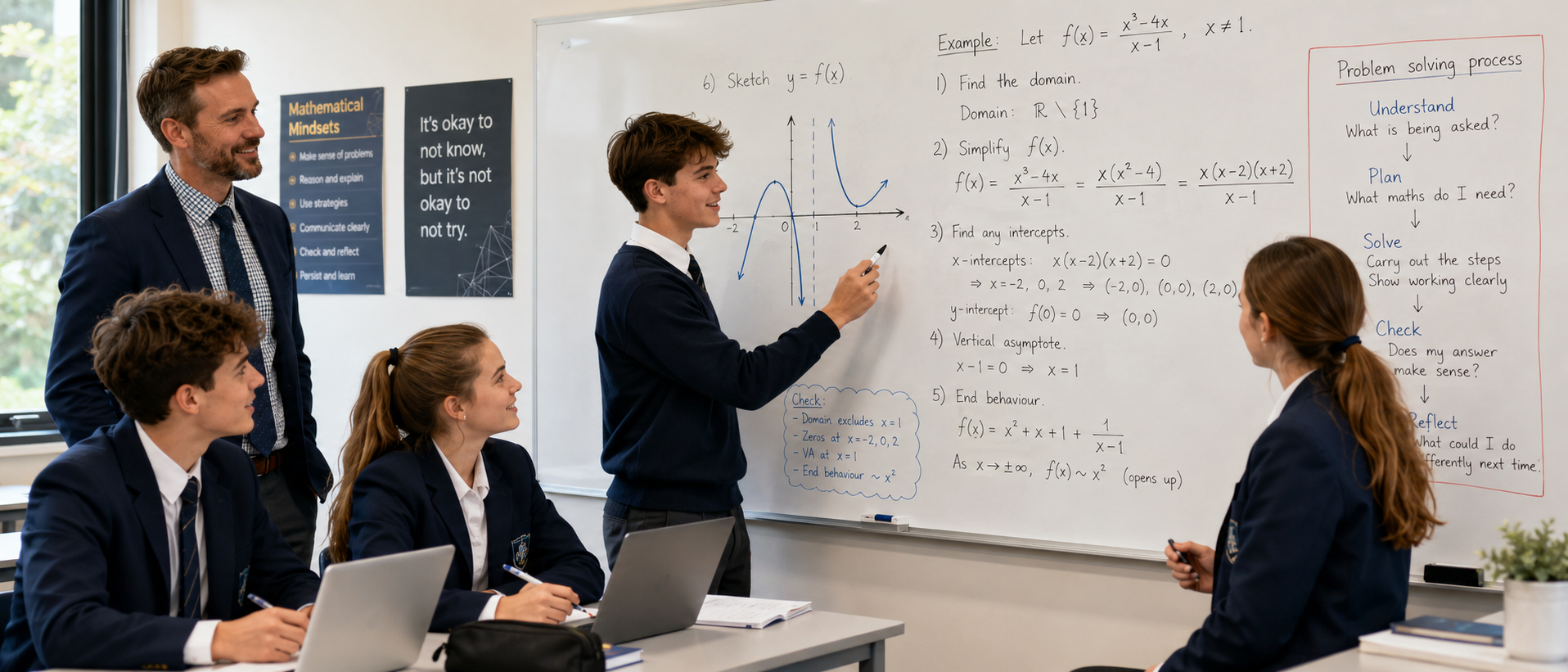
One of the most important changes is the stronger emphasis on Working Mathematically.
This means students need to show that they can:
- choose an appropriate method
- explain their reasoning
- connect different topics
- solve unfamiliar problems
- communicate their working clearly
NESA describes Working Mathematically as involving communicating, reasoning, understanding, fluency and problem solving.
For students, this means maths study should not be limited to copying examples and memorising formulas. They need regular practice with exam-style questions, worded problems and questions that combine more than one topic.
What should parents do now?
If your child is in Year 9 or Year 10, now is the right time to check their Mathematics pathway.
Parents should consider three key questions:
| 1. What level of Mathematics does my child want to take in Year 11? |
| If your child is aiming for Mathematics Advanced or Extension, they need to build the right foundation before Year 11 begins. |
| 2. Has my child covered the necessary Path topics in Year 10? |
| Some students may need extra support if their school class has not covered enough Advanced preparation content. |
| 3. Can my child handle multi-step problem-solving questions? |
| The new syllabus places more emphasis on reasoning and application. Students who only practise routine questions may struggle when they face unfamiliar exam-style questions. |
The 2026 Mathematics syllabus change should not be something to fear. Most of the major mathematical skills remain important.
However, students need to prepare properly.
For Year 10 students, the key message is simple:
Do not wait until Year 11 to find out whether you are ready for Advanced Mathematics.
The earlier students build strong algebra, graphing, trigonometry and problem-solving skills, the smoother their transition into senior Mathematics will be.
With the right preparation, students can enter Year 11 with confidence and make the Mathematics pathway that best supports their future goals.
Get Ready for the New Syllabus with Us!
Is your child ready for the 2026 changes? At Pre- Uni New College, we offer tailored tutoring programs designed to bridge the gap between Year 10 Path topics and Senior HSC success.
© Pre-Uni New College Head Office. All rights reserved. If you would like to share this article, please use the official article link rather than reproducing its content.


More articles